
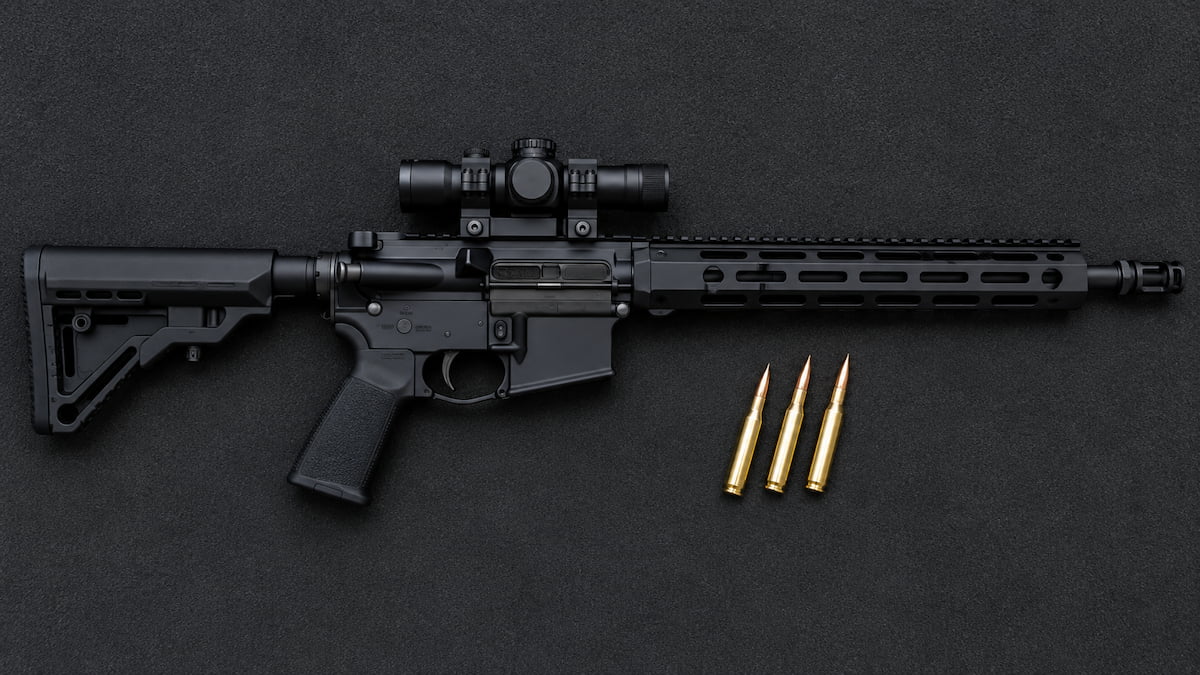
The 6mm Advanced Rifle Cartridge (6mm ARC) offers impressive long-range performance, high ballistic coefficients, and flat trajectories in an AR-15 platform, bridging the gap between 5.56 NATO and heavy short-action rounds.
However, operating in a compact gas rifle pushes component limits. Ensuring 6mm ARC safety requires careful attention to chamber pressures, bolt geometry, and parts specifications to avoid mechanical failure or damage.
This guide covers critical bolt selection, SAAMI pressure limits, magazine compatibility, and safe handloading practices.
Critical Bolt Face & Headspace Compatibility
When assembling or upgrading a rifle for 6mm ARC, your choice of bolt assembly is the single most important safety consideration.
The Type 2 Bolt Standard
The 6mm ARC relies on a 0.136-inch deep bolt face, which is the exact dimensional standard used for 6.5 Grendel (frequently referred to as a “Type 2” bolt).
This recess depth ensures proper extraction rim engagement and guarantees safe headspace when paired with a factory-headspaced 6mm ARC barrel.
The Dangerous Mix-Up
Never use an older “Type 1” 7.62x39mm bolt (which features a shallower 0.125-inch depth). Inserting a 0.125-inch bolt into a chamber cut for a 0.136-inch face creates excessive headspace.
Firing under these conditions risks blown primers, case head separation, violent gas venting into the upper receiver, and destruction of the firearm.
Bolt Lug Stress Management
The rim diameter of the 6mm ARC (0.441 inches) is noticeably wider than a standard 5.56 NATO case head (0.378 inches).
To accommodate this wider case head, manufacturers must remove metal from the interior of the bolt face, thinning the walls at the root of the bolt lugs.
Because less steel supports the locking mechanism, using high-quality, stress-tested steel bolts (such as Carpenter 158 or 9310 alloy) is mandatory to prevent sheared lugs.
SAAMI Pressure Limits: AR-15 Gas Guns vs. Bolt-Action Rifles
Understanding SAAMI (Sporting Arms and Ammunition Manufacturers’ Institute) chamber pressure thresholds is essential for safe operation, especially if you handload or shoot custom high-velocity ammunition.
Gas-Operated AR-15 Limit (52,000 PSI)
For standard AR-15 gas guns, SAAMI established a Maximum Average Pressure (MAP) ceiling of 52,000 PSI. This limit is deliberately lower than the 5.56 NATO limit (62,000 PSI) to account for the thinner bolt lugs required by the wider 6mm ARC case head. Just as understanding internal pressure and velocity thresholds is vital for handgun safety, keeping gas-gun pressures at or below 52,000 PSI protects bolt lug longevity and prevents premature structural fatigue.
Bolt-Action / Custom Action Limit (62,000 PSI)
In strong bolt-action receivers or dedicated custom bolt rifles, the 6mm ARC can be safely loaded up to 62,000 PSI.
Bolt-action receivers feature significantly stronger locking lugs and massive receiver walls, allowing them to handle higher pressures without risk.
However, firing high-pressure bolt-action loads in an AR-15 gas gun is extremely dangerous and will quickly lead to sheared bolt lugs or total action failure.
Recognizing Over-Pressure Signs
Always inspect your fired brass for early warning signs of excessive chamber pressure:
- Flattened or Cratered Primers: Primers that flow outward and fill the entire primer pocket anvil area.
- Ejector Smears & Marks: Distinct raised brass shavings or shiny extrusions stamped onto the case head from the ejector port hole.
- Popped Primers: Loose primers dropping out of the case head into the lower receiver upon extraction.
- Stiff or Sticky Extraction: The charging handle or bolt lift feeling excessively heavy due to expanded brass adhering to the chamber walls.
Safe Reloading & Component Selection for 6mm ARC
Handloading for the 6mm ARC requires meticulous attention to detail to ensure cartridges stay within safe pressure margins.
- Powder Selection: Always utilize appropriate medium-burn propellants (such as CFE 223, LeverEvolution, Varget, or AR-Comp) and strictly follow published SAAMI and Hornady 6mm ARC load data. Never extrapolate load data from larger 6mm cartridges like 6mm Creedmoor or 243 Winchester.
- Case Trimming & Neck Clearance: The 6mm ARC features a steep 30-degree shoulder. Brass stretches over repeated firings; failing to trim cases to the proper overall length allows the case mouth to pinch against the front of the chamber angle, preventing clean bullet release and creating dangerous pressure spikes.
- Primer Seating & Slamfire Prevention: In semi-automatic AR-15 platforms, floating firing pins make light contact with the primer during chambering. Always seat hard-cup, non-corrosive primers (such as CCI #41, CCI 450, or military-spec small rifle primers) flush to 0.003–0.005 inches sub-flush. Soft commercial primers increase the risk of an unintended slamfire upon bolt closure.
6mm ARC Safety & Technical Reference Table
| Platform / Component | Standard Specification | Max SAAMI Pressure Limit | Critical Safety Hazard / Risk |
| AR-15 Gas Gun | 0.136″ Type 2 Bolt | 52,000 PSI | Excess pressure causes bolt lug shear or head separation |
| Bolt-Action Rifle | Standard Short Action | 62,000 PSI | Running bolt-action loads in AR-15 causes catastrophic failure. |
| Incorrect Bolt (Type 1) | 0.125″ Depth | N/A (Unsafe) | Improper headspace leads to blown cases and gas venting |
| Magazines | Dedicated 6mm ARC / 6.5 Grendel | N/A | Using standard 5.56 mags causes double-feeds and nose-dives |
Magazines, Feeding, and Barrel Extension Safety
Feed geometry plays a crucial role in overall firearm safety and cycling reliability.
- Dedicated Magazines Only: Never use standard 5.56 NATO magazines for 6mm ARC rounds. The wider case taper causes binding, nose-dives, and double-feeds. Always use dedicated 6mm ARC or 6.5 Grendel magazines with modified geometry and proper feed lip angles.
- Checking for Bullet Setback: Improper magazines can push the bullet back into the casing upon hitting feed ramps. This bullet setback drastically reduces internal volume, potentially doubling chamber pressure and causing catastrophic failure.
FAQs
Is 6mm ARC safe to shoot in a standard 5.56 AR-15 upper?
No. A 6mm ARC cartridge cannot be fired through a standard 5.56 NATO barrel or bolt assembly. Chambering a 6mm ARC round into a 5.56 upper will result in a severe chamber obstruction or catastrophic failure upon firing.
Running 6mm ARC requires a dedicated 6mm ARC barrel, a 0.136″ (Type 2) bolt assembly, and dedicated magazines.
What bolt do I need for a 6mm ARC build?
A 6.5 Grendel Type 2 bolt with a 0.136-inch face depth. Using a Type 1 bolt (0.125-inch face depth) creates dangerous headspace errors that risk blown primers, case rupture, and action damage.
Why is the pressure limit lower for 6mm ARC in an AR-15 than 5.56 NATO?
Because the wider case head requires removing metal from the bolt face, thinning the locking lugs. Capping SAAMI pressure at 52,000 PSI for gas guns prevents excessive lug stress, ensuring long-term bolt life and safe cycling.
Conclusions
The 6mm ARC offers unmatched long-range ballistics from a compact rifle footprint, but maintaining peak performance requires strict adherence to safe operational protocols. By selecting a dedicated Type 2 (0.136″) bolt, respecting the 52,000 PSI gas-gun pressure ceiling, and feeding exclusively from dedicated magazines, you can enjoy maximum accuracy without risking mechanical damage.
At BC Ammo, we prioritize safety and performance in every round we carry. Our rifle inventory undergoes rigorous pressure monitoring, strict charge metering, and thorough component inspection to guarantee safe, reliable cycling on every trigger pull.
Build your long-range setup with confidence. Explore BC Ammo’s Frontier Cartridge 6mm ARC for reliable, pressure-verified performance on every range day.


