
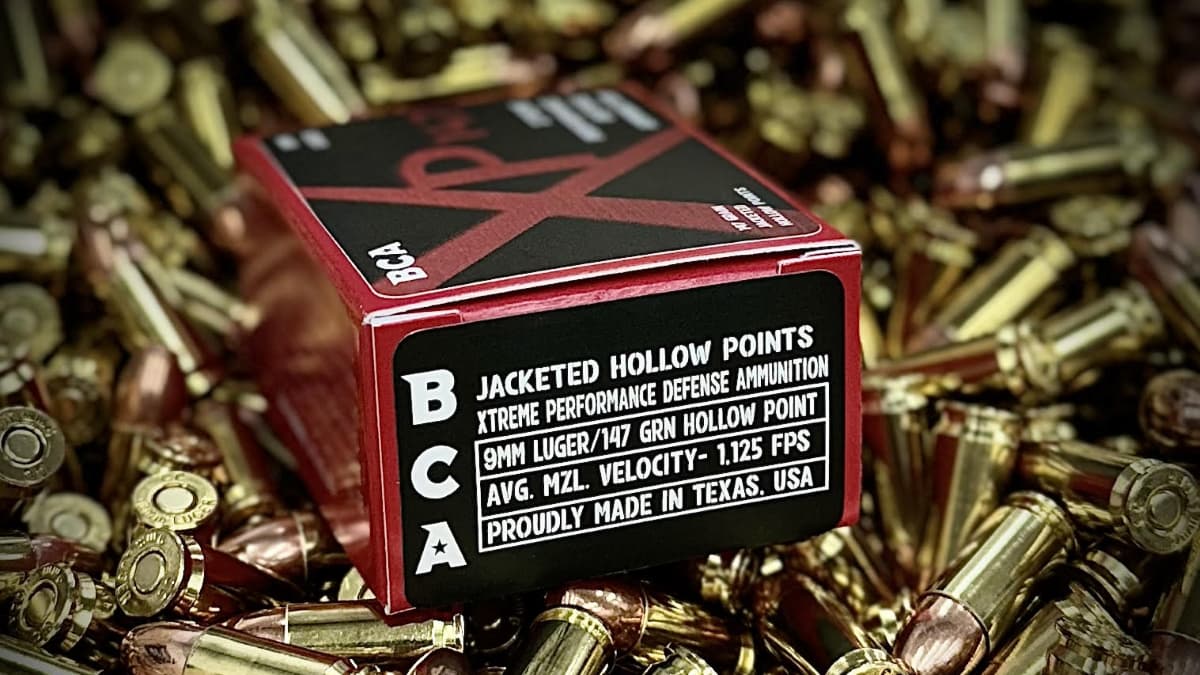
At a glance, most 9mm cartridges look nearly identical, but the “business end”—the projectile—is what determines whether a round is built for casual practice, serious competition, or life-saving self-defense.
In technical terms, the 9mm is a versatile caliber that has undergone a massive evolution, moving from simple bare lead rounds to advanced polymer-coated and bonded-jacketed technologies.
Choosing the right ammunition can be the difference between a frustrating day of cleaning lead fouling and a high-performance session at the range.
This guide will walk you through the different types of 9mm ammo to help you choose the perfect projectile for your specific shooting needs.
The Main Types of 9mm Projectiles
The design of the bullet determines how it interacts with your barrel and what happens when it hits the target.
Full Metal Jacket (FMJ)
Often referred to as the standard “range ammo,” the FMJ consists of a soft lead core covered in a hard copper jacket.
Because the jacket doesn’t expand on impact, these rounds are affordable and reliable for high-volume practice and plinking.
Jacketed Hollow Point (JHP)
Unlike the rounded nose of an FMJ, the JHP features a hollowed-out tip designed to expand rapidly upon impact.
This expansion creates a larger wound channel and prevents the bullet from passing entirely through a target, making it the gold standard for self-defense and duty use where stopping power is a priority.
Polymer-Coated (Blue Bullets)
These projectiles represent the modern “Synthetic Jacket.” Instead of copper, a heat-bonded resin acts as a total physical barrier between the lead core and the steel of your barrel.
They are the preferred choice for competition and high-volume training where cleanliness, lack of smoke, and cost-efficiency are the primary goals.
Total Metal Jacket (TMJ) & Plated
TMJ and plated bullets are cleaner-firing alternatives to standard FMJ because they encapsulate the lead base, reducing lead exposure at the firing line.
However, the thin copper “skin” on plated bullets is often more sensitive to reloading errors—such as over-crimping—compared to the resilient bond of polymer-coated rounds.
9mm Bullet Weights (Grains)
In the world of ammo, “grains” refers to the weight of the projectile, which affects recoil, velocity, and point of impact.
115 Grain
This is the lightest and fastest common 9mm weight. It is the most widely available “range” weight, offering a snappy recoil impulse that many shooters use for general target practice.
124 Grain
Considered the middle ground, 124gr is often loaded to NATO standards. It provides a balanced recoil profile and consistent velocity, making it a favorite for both training and duty use.
147 Grain
The “heavy” 9mm projectile. Because of its weight, 147gr rounds are typically subsonic (traveling slower than the speed of sound), which eliminates the loud “crack” of a sonic boom. This makes them the primary choice for shooters using suppressors.
FAQs
What is the difference between 9mm and 9x19mm?
Nothing. They are the exact same thing. 9mm Luger, 9mm Parabellum, and 9x19mm are all different names for the same standard caliber used globally.
Which 9mm ammo is best for indoor ranges?
Polymer-coated bullets. Because they lack the smoke-producing wax lubricants found in traditional lead bullets, they keep the air clearer and satisfy the strict ventilation requirements of most indoor facilities.
Can I use competition ammo for self-defense?
No. While competition-focused rounds like Blue Bullets are incredibly accurate and reliable, they do not have the expansion technology found in JHP rounds to stop a threat safely and effectively.
Conclusions
Choosing the right type of 9mm ammo depends entirely on your goals for the day:
FMJ is perfect for basic practice, JHP is a must for defense, and Blue Bullets offer the cleanest, most efficient path for high-volume shooting and competition.
Understanding these differences is the first step toward becoming a more proficient and informed marksman.
Ready to upgrade your range sessions? Explore BCA’s 9mm Blue Bullet lineup—from 124gr to 147gr—and find your perfect match.


