
Buying single boxes of 20 or 50 rounds at local retail counters is easily one of the most expensive ways to enjoy target shooting.
Over time, those retail markups quietly drain your range budget, restricting your trigger time and limiting how often you can practice critical shooting fundamentals.
The solution is purchasing in quantity. Buying bulk ammo means acquiring rounds in sealed cases—typically ranging from 500 to 1,000+ rounds—to drastically reduce your Cost Per Round (CPR).
This guide on buying bulk ammo breaks down how to calculate true savings, evaluate manufacturing quality, navigate online shipping compliance, and properly store your inventory to maximize its shelf life for decades to come.
Step-by-Step Guide on Buying Bulk Ammo
Before placing an order for a multi-case shipment, following a structured evaluation process ensures you don’t end up with hundreds of rounds your firearm dislikes.
Step 1: Verify Firearm Reliability First
Never purchase 1,000 rounds of a specific grain weight, bullet profile, or coating—such as polymer-coated lead or Jacketed Hollow Points (JHP)—without testing it first.
Every handgun and rifle barrel has unique mechanical preferences and feed-ramp tolerances. Buy a single 50-round box first and fire it through your primary firearm.
Once you confirm 100% reliable feeding, extraction, and lock-back, you can confidently invest in a full case.
Step 2: Understand Casing and Bullet Types
Matching the case and projectile materials to your shooting environment prevents wasted money and range-day headaches:
- Brass vs. Steel/Aluminum Casings: Brass is the gold standard because it expands cleanly, reduces extractor wear, and is reloadable. While steel or aluminum-cased ammo is cheaper upfront, steel expands less flexibly, leaves extra carbon fouling, and is often banned by indoor ranges.
- Practice vs. Defensive Projectiles: For bulk range training, select affordable Full Metal Jacket (FMJ) or polymer-coated rounds (like Blue Bullets) to keep costs low. Reserve high-cost Jacketed Hollow Points (JHP) for bulk self-defense or duty reserves where controlled expansion and barrier penetration are required.
Step 3: Evaluate Manufacturing Consistency
Not all bulk ammunition is produced to the same tolerances. Avoid mystery surplus or unverified remanufactured loads with unknown powder charges.
Look for manufacturers that build in small batches, perform real-time pressure testing, and strictly adhere to SAAMI (Sporting Arms and Ammunition Manufacturers’ Institute) standards.
Uniform powder charges and consistent jacket concentricity mean predictable point-of-impact, preventing unexpected “flyers” during training.
Step 4: Check Legal & Shipping Compliance
Because ammunition contains energetic materials, federal law restricts shipping to Ground Freight only under Limited Quantity (formerly ORM-D) hazard guidelines.
Air freight and PO Box deliveries are strictly prohibited. Furthermore, state laws vary significantly:
- Direct-to-Door States: Most U.S. states allow direct-to-door delivery with standard automated age verification (18+ for rifle, 21+ for handgun).
- Restricted States: States like California and New York require bulk ammo to ship directly to a licensed Ammunition Vendor or FFL. Illinois, New Jersey, and Connecticut require buyers to submit state permits or FOID cards before the carrier releases the shipment.
The Economics of Buying Bulk Ammo
The single most important metric when evaluating ammunition value is the Cost Per Round (CPR). Looking strictly at the overall sticker price of a case can be misleading, as hidden fees like freight charges can quickly erase your unit savings.
To find your true savings, always calculate CPR using this formula:
True Cost Per Round (CPR)} = Total Product Price + Shipping + Taxes / Total Number of Rounds
For instance, a $250 case of 1,000 rounds of 9mm with $20 shipping equals a true CPR of $0.27 per round.
Comparing this to buying single retail boxes at $0.40 per round reveals an immediate savings of $130 per thousand rounds fired.
Common bulk volume options include:
- 500-Round Half-Cases: Ideal for shooters testing a new load or budgeting across multiple calibers.
- 1,000-Round Full Cases: The industry benchmark for maximum volume discounts on standard range calibers.
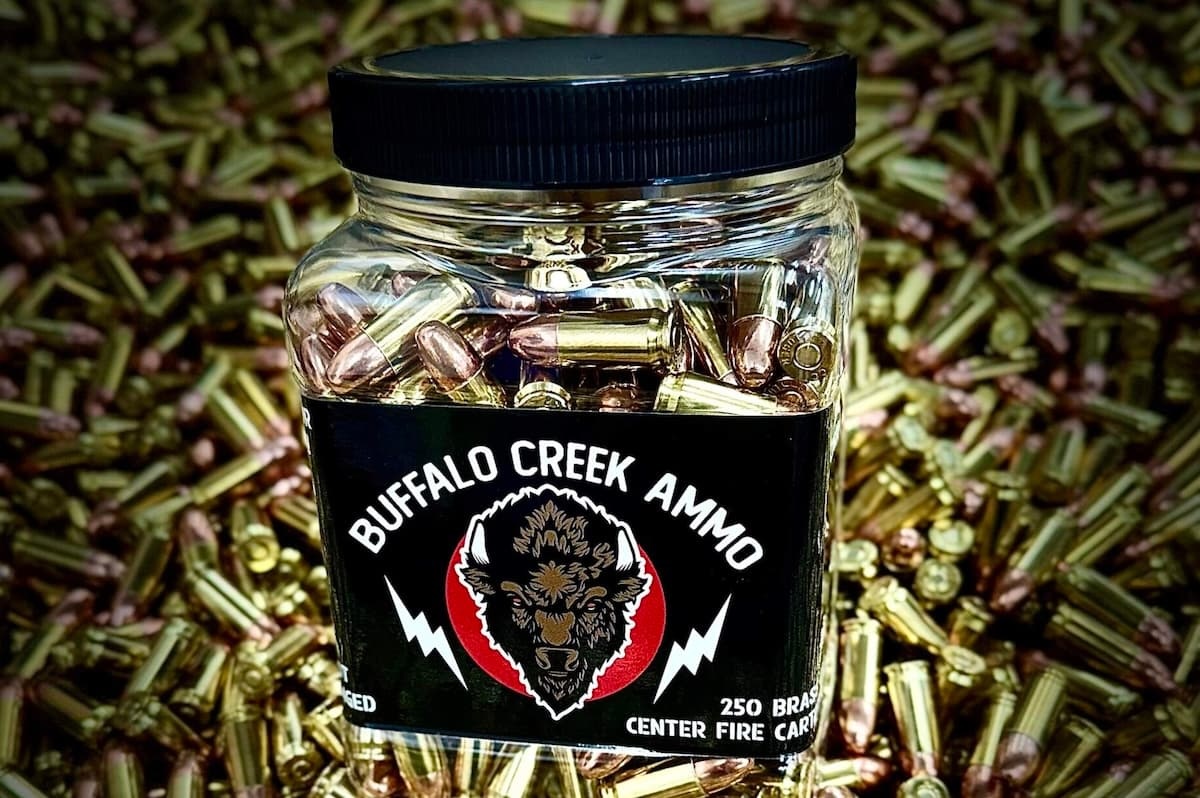
- Bulk Jars and Cans (250–1,000+ Rounds): Specialized packaging designed to eliminate individual cardboard box waste, providing loose rounds ready for instant range loader filling.
When Bulk Makes Sense and When It Doesn’t
When It Makes Sense
- High-Volume Calibers: Core range calibers like 9mm Luger, 5.56 NATO / .223 Rem, and .308 Win that you shoot consistently throughout the year.
- Competitive Shooting: Disciplines like USPSA, IDPA, or 3-Gun where firing 300+ rounds per match requires tight lot-to-lot velocity consistency.
- Pre-Inflation Hedge: Locking in current pricing protects your shooting budget against raw material metal cost increases and market panics.
When It Doesn’t Make Sense
- Unproven Firearm Platforms: Buying bulk for a brand-new gun before verifying its cycling preferences.
- Low-Volume / Specialized Calibers: Niche hunting cartridges or rare bolt-action calibers fired only a few times a year.
How to Store Bulk Ammo for Long-Term Duration
Ammunition has no natural expiration date, but environmental exposure degrades primers and propellants over time. Stored ammunition is primarily threatened by humidity, extreme heat fluctuations, and corrosive chemicals.
Follow these storage protocols to maintain factory-grade reliability for decades:
- Use Air-Tight Storage Cans: Transfer loose or boxed bulk ammo into heavy-duty steel or high-grade polymer ammo cans equipped with an active rubber O-ring gasket. The gasket creates an airtight seal that locks out ambient humidity.
- Incorporate Desiccant Packs: Place silica gel desiccant packs inside sealed ammo cans to absorb any residual moisture trapped in the air during packing.
- Keep Off Concrete Floors: Never stack ammo boxes directly on raw concrete basement or garage floors. Concrete draws moisture from the ground, which will leach into cardboard packaging and corrode brass casings. Place cans on wooden shelving or wooden pallets.
- Control Temperature Swings: Avoid storing bulk inventory in uninsulated attics or hot garages. High heat accelerates the chemical breakdown of gunpowder, while rapid temperature swings cause condensation to form inside sealed containers. Keep your supply in a cool, dark, climate-controlled closet or safe.
FAQs
Does bulk ammo expire?
No. Factory ammunition stored in a cool, dry, sealed environment with active desiccants does not expire. Cartridges stored correctly retain their original velocity, ignition reliability, and accuracy profiles for 30 to 50+ years.
Is it legal to have bulk ammo shipped to my house?
Yes, in the vast majority of states. Provided you meet federal age requirements (18 for rifle ammunition, 21 for handgun ammunition), ammo can be delivered directly to your home address. Residents in restricted states (like CA, NY, IL, or NJ) simply need to submit their state credentials or select a local FFL transfer point during online checkout.
Can you mix different lots of bulk ammo in the same box?
No, it is not recommended. You should always keep bulk ammunition separated by manufacturer lot numbers. Mixing lots makes it impossible to isolate specific production batches if you encounter an under-charged round, a squib, or a pressure anomaly while shooting.
Conclusions
Buying bulk ammo is the most effective way to build training reserves and sharpen marksmanship affordably. Success requires balancing upfront savings with verified firearm reliability and proper long-term storage.
At BC Ammo, we eliminate middleman markups by offering factory-direct pricing on Texas-manufactured ammunition.
From our bulk 9mm Luger jars to specialized rifle loads, every batch features carefully selected brass, clean-burning propellants, and rigorous pressure testing to ensure flawless feeding and lot-to-lot consistency.
Ready to lock in lower costs for your next range day? Browse BC Ammo’s inventory today and stock up on Texas-engineered precision.


